
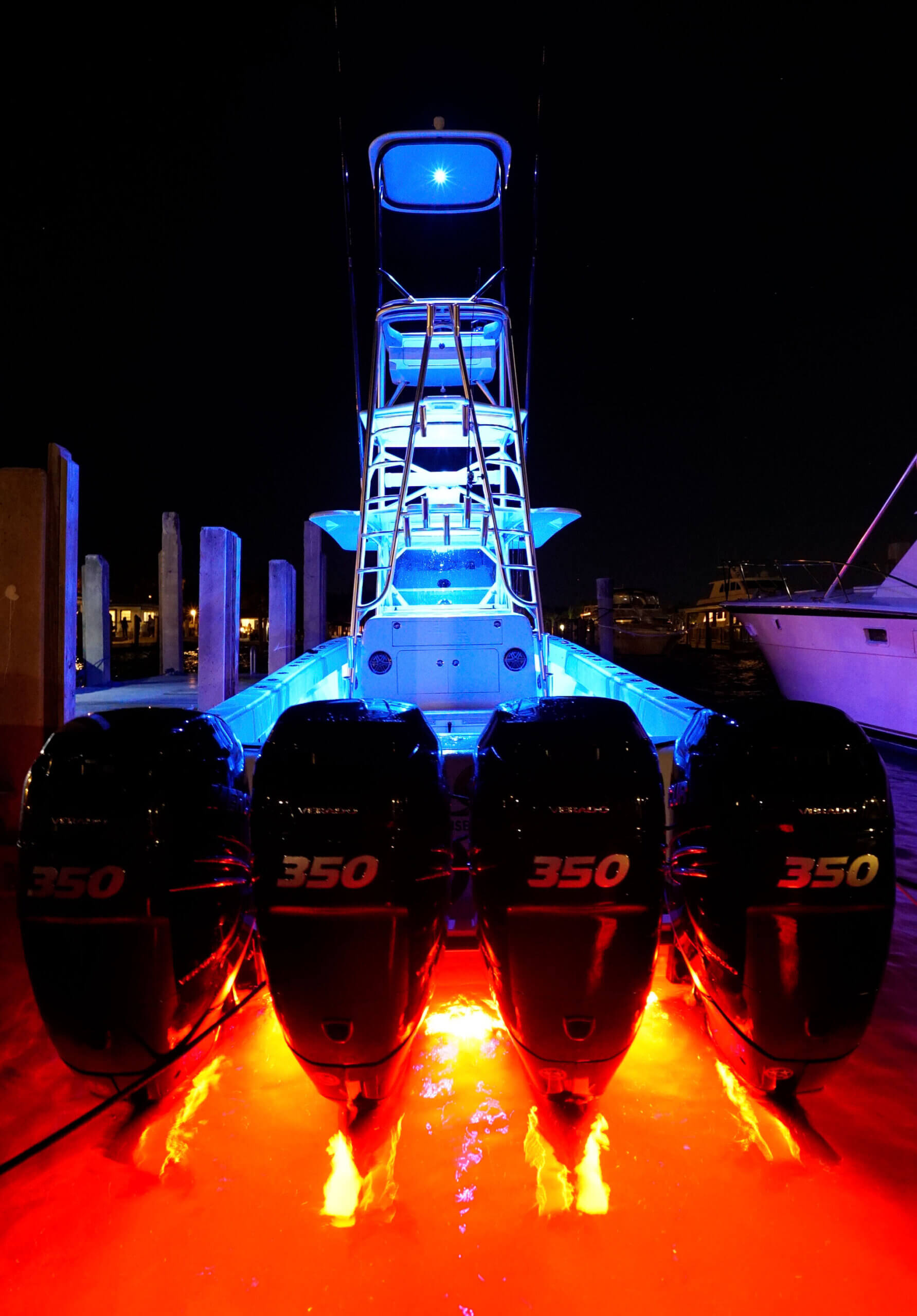
Some boaters like them purely for their entertainment value while they’re anchored, tied to the dock or powering along blasting music that’s synched with dancing colored lights. Others swear they attract fish and help them fill the cooler. Still others tout security. No matter the reason, it’s clear that underwater lighting has taken hold among many boaters. Below are four that are considered to be the best.
Whether you’re outfitting a new boat or refitting an existing vessel, selecting the right electronics can make your head spin because of the dizzying variety of brands and models, each touted as the one to buy. We’re here to help you narrow down the choices.
Every year at Marine Electronics Journal, we ask manufacturers to name the one model or series of electronics that they consider their best based on factors such as innovation, popularity or utility, or maybe it has proved itself over time. There are 20 product categories in all, from AIS to wireless devices. We call the results the Best & Brightest Boating Electronics.
For the next several weeks The Mic will report on the winners. Last week we rolled out the best marine VHFs. Below are the best underwater lights on the market.
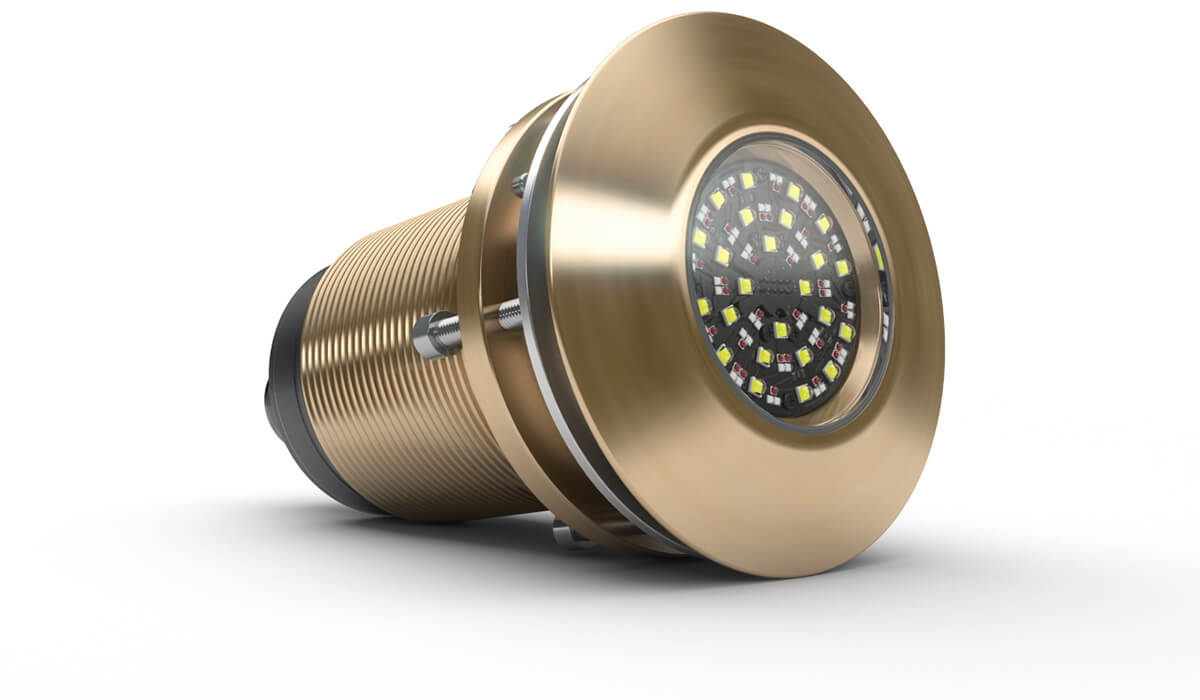
Lumishore TIX804
The TIX804 is a leader in high-performance underwater lighting solutions. With its expansive 110° beam angle, the TIX804 casts a captivating halo of light around the vessel. Available in SUPRA dual-color and EOS full-color-change models, it caters to diverse lighting needs. Its internal driver facilitates convenient servicing from inside the hull, eliminating the hassle of vessel hauling. Designed for transom, side and bottom mounting, it offers adaptable installation options. The TIX804 SUPRA, available in blue and white, emits an impressive 13,500 verified fixture lumens. Boaters can toggle between colors, adjust brightness, and activate two-speed strobing. Control is accessible through the SUPRA i-Connect Hub & Switch, compatible MFDs, or an optional Lumishore display. The TIX804 EOS delivers full-color-change capability, boasting 12,000 fixture lumens.

Style and performance converge in the Javelin 600X underwater light from Lumitec. Tailored for high-performance trailer boats, the Javelin boasts a sleek, highly polished housing and a contemporary, stylish rectangular design with a proprietary plating process, preserving Lumitec’s renowned solid naval bronze construction while adding a brilliant, high-luster finish. Harnessing the same “smart light” technology as our popular SeaBlazeX2 series, Javelin delivers over 6,000 lumens of exceptional performance, vibrant full-color RGBW output, easy surface-mount installation, and intuitive operation. Ideal for freshwater boats of all sizes, yet robust enough for saltwater applications.
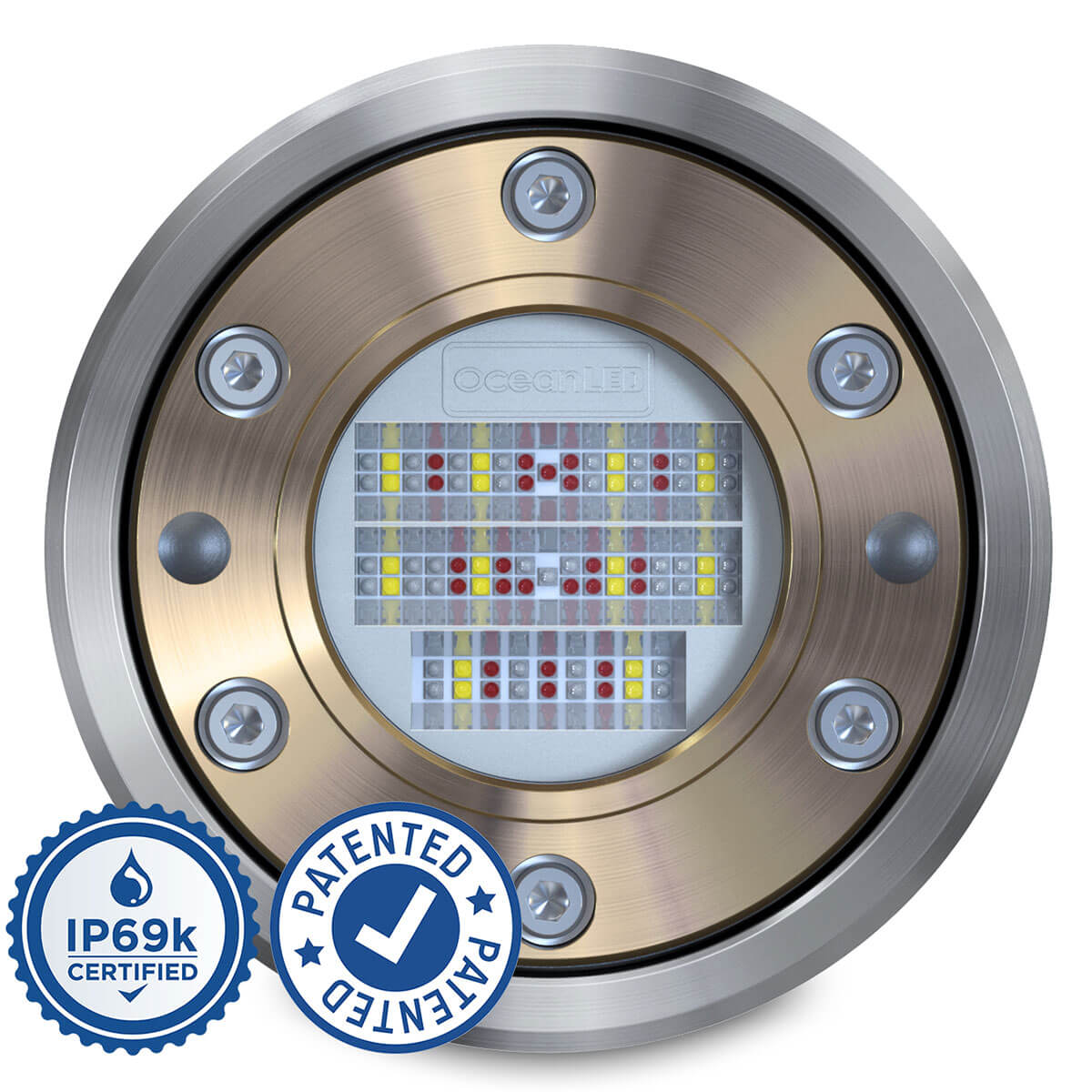
The Explore E9 is a revolutionary underwater light developed for superyachts, boasting a one-of-a-kind patented wet connection. The light cartridge can be changed in water, removing the need for the expensive exercise of hauling the yacht. This innovation in light design means areas once inaccessible to underwater lights like bulbous bows are a thing of the past. The Explore E9’s top-drawer performance is thanks to the advanced optics developed by the R&D team at OceanLED. The clever optics focus light into a 90° x 20° blade, greatly increasing the light's ability to travel through the water. Rated to IP69K, accredited as a sustainable solution by the Water Revolution Foundation and offering 13,000 fixture lumens, the E9 is an ideal choice for superyachts.
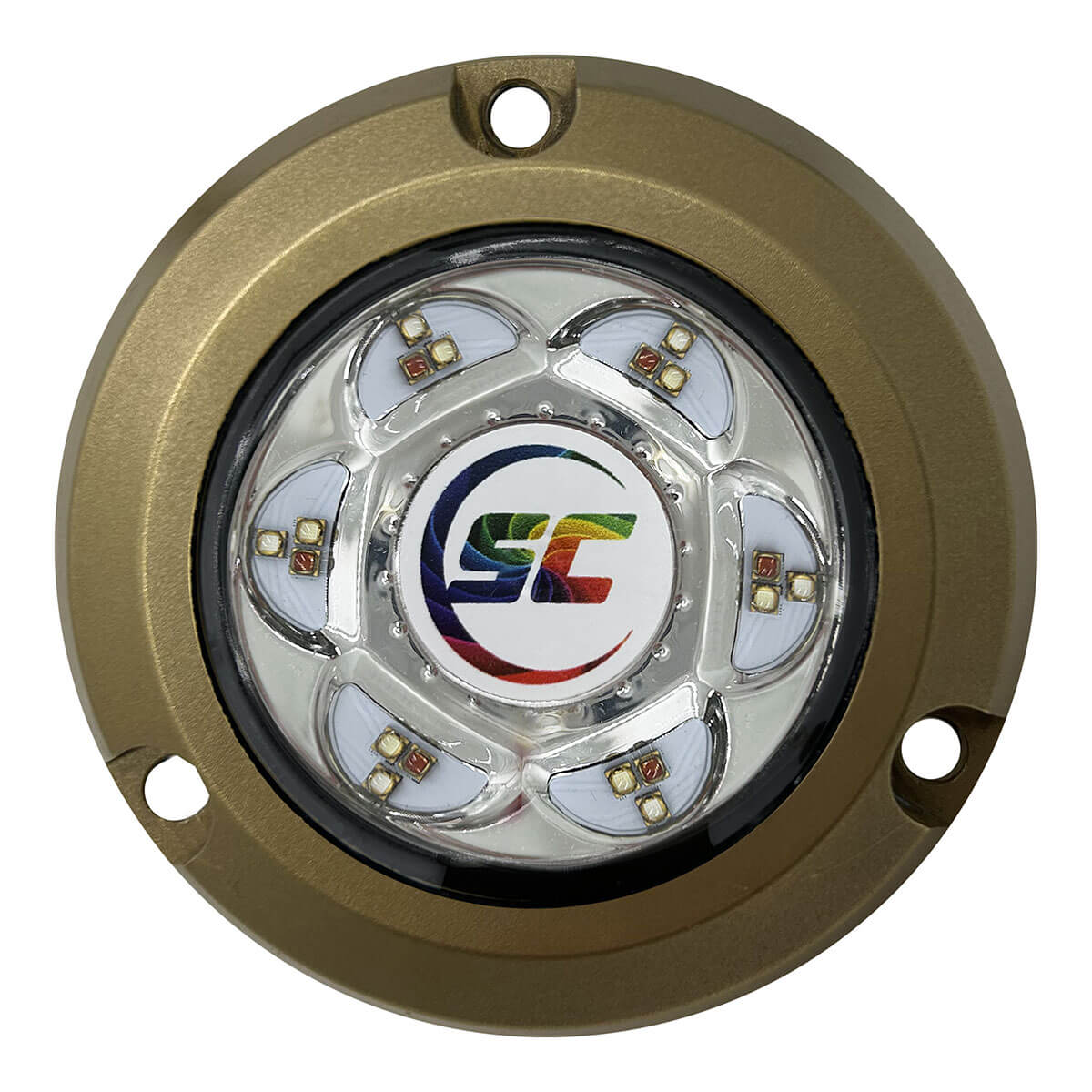
With their subcompact 2.99-inch diameter, the new SC2-SM Series makes it easy for OEMs, custom boatbuilders and DIYers to install premium, reliable underwater lighting on virtually any hull. Designed and manufactured in the USA, Shadow-Caster’s SC2-SM Series operates on 12 or 24 volts and provides 24 watts and up to 3,000 lumens of intense LED lighting. The fixtures are available in three lamp colors: bimini blue, great white and full color. All have .58-inch-high low-profile IP68 waterproof housings in bronze or black high-strength composite. Surface mount with three included screws. The lens is a rugged, scratch-resistant borosilicate glass that’s impervious to acetone and other solvents, The SC-2s feature transient surge, reverse polarity protection and thermal throttling technology that allows them to run safely out of water.
Plastic, aluminum, stainless steel or bronze—which is right for you?
Earlier this year, Marine Electronics Journal ran a comprehensive article about underwater lighting for its technical readers written by Brian Rogers, co-founder of Shadow-Caster. The excerpt below sheds light on the benefits and downsides of various materials that are used in the manufacture of underwater lights.
What type of material is best for an underwater light? There is a range of options. The four main types are plastic (regular and thermally enhanced), aluminum, stainless steel, and bronze. Ultimately, the best choice comes down to budget, performance, boat type and the environment the boat will live in.
Plastic: Typically, this is the most budget-friendly option, and it’s seen a lot in smaller aluminum and pontoon boats. There’s a variety of small plastic underwater lights available that work well on smaller boats with tight spacing and budget requirements. Unfortunately, as these lights go up in size and brightness, their reliability tends to go down. This is due to plastic being a poor thermal conductor. Thermal conductivity is important because LEDs do not radiate heat in the same fashion that an incandescent light would. Instead, the wasted heat is conducted through the material and into the housing and ultimately into the water.
Longevity (lifetime of the actual LED) is directly related to time the LED spends at temperature. Run the LED too hot for too long and it dies an untimely death. Also, a cooler LED is brighter and more energy efficient. This is a good time to point out that a lot of higher power underwater lights are designed to only operate underwater. If you run them outside of the water for too long, they run the risk of what is referred to as “thermonuclear meltdown!” Always make sure that the product that you choose is protected against overheating.
Aluminum: If you desire a brighter light in the same amount of space as a plastic light, consider that aluminum is over 100 times more efficient at conducting heat than typical plastics, and at least 20 times better than most thermally enhanced plastics. Even though aluminum should always have some type of coating for protection of the bare metal, it is a good option for higher performance applications on pontoons and smaller boats. Aluminum lights will even work well for larger center console-style boats that are trailer and lift kept. Aluminum lights are not recommended for regular saltwater use. If the coating on the aluminum is scratched or compromised, it can lead to an entry point for corrosion and quickly become unsightly.
Stainless Steel: This material does not require coating as it is protected by its natural oxide layer. It is a great choice as it can be mirror polished to provide a very high-end look. (Specifically, SS316 is recommended for any application that will be exposed to saltwater, but less corrosion-resistant forms 303 and 304 can be found in some products as well.) Stainless steel is not recommended for applications where the boat will be kept in saltwater for extended periods of time, especially around marinas and possible sources of stray current. Stray current can cause one end of the stainless light to act as an anode and leach out ferrous content and exhibit unsightly surface rust.
Bronze: For larger fiberglass boats living in freshwater, aluminum is acceptable, but often bronze is a better option as it is much better suited for saltier environments. Larger boats that will live in the water full time are generally recommended to use a bronze product. As such, most quality boat manufacturers that produce vessels which are potentially used in saltwater specify bronze housing underwater lights. Bronze forms its own oxidation layer and can protect itself in corrosive environments without fragile coatings like those required on aluminum. The thermal performance of bronze is good, and generally recommended for larger “live-in-water” boats and boats that are regularly exposed to corrosive saltwater environments.